Disaster IRB
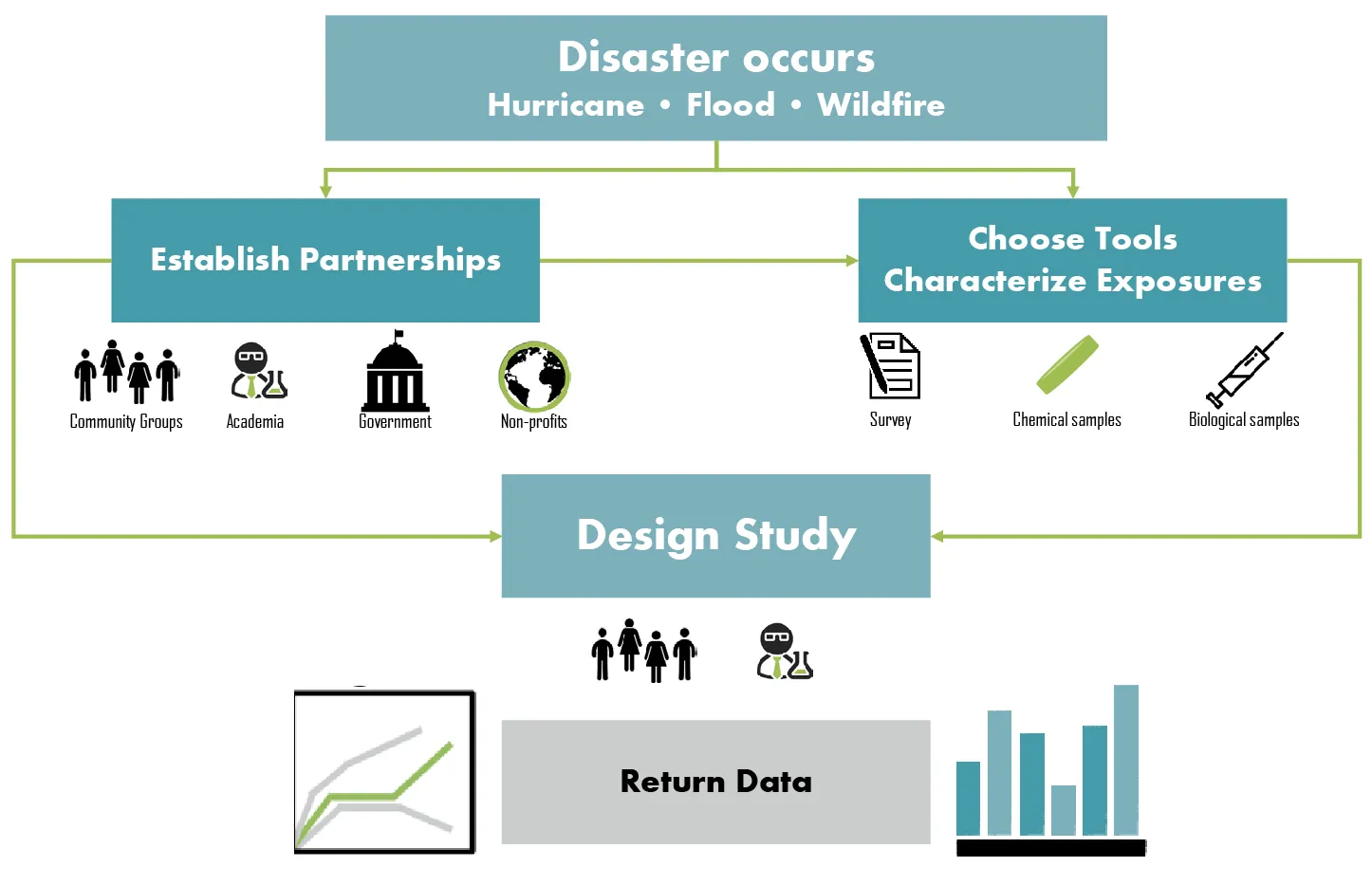
The OSU Superfund developed an Institutional Review Board for disaster situations in 2017. This IRB has since been used to respond to several disasters and scenarios with emerging chemical contaminants, including a Hurricane Harvey study and a Hurricane Florence study.
Considerations for ethical disaster response
- Access - Consider childcare needs, difficulty to access study sites, inability of evacuees to be involved in research.
- Basic Needs - Research should not interfere with participants basic needs (Shelter, food, water) or ability to access those needs.
- Equity - Research should benefit everyone; study population should represent impacted communities (adults + children) equitably.
- Transparency - Work with communities to make sure research is wanted and appropriate. Involve communities in data collection and return of data.
- Engagement - Integrate community needs and concerns into study design; use tools the community can use easily. Address ethical considerations of community engagement and reporting back before starting a study.
- Expectations - Research should be clearly defined. Identify what the research can and cannot determine, and how it can and can not be used. Provide resources to minimize exposure.
- Environmental Health Literacy - Results of the research should be used to improve education about environmental exposures. The data should help individuals learn about their exposure, and the exposure of their community.
OSU Chemical Exposure Disaster Protocol
OSU Chemical Exposure Disaster Questionnaire
Image